

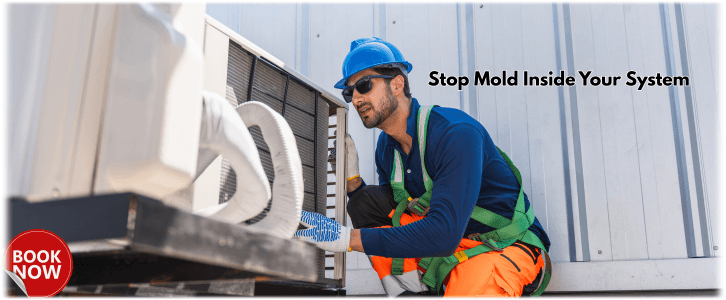
Musty air coming from your vents can make your home feel uncomfortable. Professional HVAC mold removal in Alexandria, VA helps homeowners address suspected contamination inside heating and cooling equipment. Excess moisture, clogged drain lines, and damp components can encourage mold growth. Consequently, these conditions may create unpleasant odors and raise indoor air quality concerns. Our team helps identify potential problems and explore appropriate solutions. Call (571) 651-8018 today to discuss your concerns and arrange an assessment.
Protect Your Home With HVAC Mold Removal in Alexandria, VA
Your HVAC system circulates conditioned air throughout your living spaces. However, persistent moisture can encourage microbial growth on suitable surfaces inside the equipment.
Our approach to HVAC mold remediation focuses on identifying affected components and investigating moisture sources. Additionally, we consider equipment condition and accessibility before recommending treatment.
From historic homes in Old Town to modern residences near Potomac Yard, Alexandria properties have different cooling configurations.
When Alexandria HVAC Mold Removal May Be Necessary
Mold-related concerns often begin with subtle changes. Therefore, watch for warning signs around your heating and cooling equipment.
Persistent musty odors: Unpleasant smells become stronger whenever your air conditioner operates.
Suspicious discoloration: Dark patches appear near accessible coils, drain pans, or ventilation openings.
Recurring condensation: Moisture repeatedly collects around equipment or nearby surfaces.
Drainage issues: Water accumulates when condensate lines become obstructed.
Excessive humidity: Mechanical closets or surrounding rooms remain unusually damp.
However, ordinary dust and staining can resemble microbial growth. A qualified assessment helps determine whether contamination exists.
How We Approach HVAC Contamination
Successful remediation requires more than masking odors. Instead, proper treatment addresses affected materials and the conditions that support mold growth.
Careful Assessment and Targeted Treatment
Equipment evaluation: We examine accessible HVAC components for suspicious buildup and visible moisture.
Moisture investigation: We review condensation concerns, drainage conditions, and potential humidity sources.
Containment planning: We determine appropriate precautions to limit contaminated particle movement during remediation.
Material assessment: We identify surfaces that may allow cleaning and components that require replacement.
Final recommendations: We explain our observations and discuss additional maintenance or specialized repairs when necessary.
Importantly, severely contaminated porous materials may require replacement. Furthermore, moisture correction helps reduce the likelihood of recurring problems.
Why Alexandria’s Humidity Matters
Northern Virginia experiences hot, humid summers that place considerable demands on residential air conditioners. Consequently, cooling equipment regularly produces condensation while managing indoor temperatures.
Older properties around Del Ray and Rosemont may contain aging equipment or limited mechanical ventilation. Meanwhile, newer townhouses near Eisenhower Avenue often feature compact utility spaces.
Additionally, clogged drains, damaged insulation, and excessive indoor humidity can contribute to damp conditions.
Homeowners throughout ZIP codes 22301, 22304, and 22314 should monitor persistent moisture near cooling equipment.
Reducing Future Mold Risks
Effective prevention starts with controlling moisture. Therefore, homeowners should address leaks promptly and maintain clear condensate drainage.
Additionally, regular filter replacement helps maintain appropriate airflow. Professional air conditioner mold cleaning may become necessary when qualified assessment confirms contamination.
However, avoid applying household bleach or unapproved chemicals directly to HVAC components. Improper treatment may damage equipment without correcting the underlying problem.
Additional Home Ventilation Maintenance
HVAC care often involves several related services. For example, air duct mold removal addresses confirmed contamination inside ventilation pathways.
Meanwhile, AC coil cleaning removes ordinary buildup from accessible cooling surfaces. Ductwork inspection helps identify visible damage and potential moisture concerns.
Additionally, air duct cleaning addresses accumulated dust when conditions justify cleaning. Dryer vent cleaning removes lint from separate laundry exhaust systems.
Together, appropriate maintenance and humidity control support better household ventilation conditions.
Frequently Asked Questions
Can mold grow inside an air conditioning system?
Yes. Persistent moisture can encourage mold growth on suitable surfaces. Condensation problems, clogged drains, and damp materials may create favorable conditions.
Will HVAC mold return after cleaning?
Mold can return when moisture problems remain unresolved. Therefore, effective remediation should address contamination, drainage issues, and underlying humidity concerns.
How can I arrange HVAC mold removal in Alexandria, VA?
Call (571) 651-8018 to discuss HVAC mold removal in Alexandria, VA. Our team helps homeowners evaluate suspected contamination, review moisture concerns, and explore appropriate remediation options.
Don’t Let Hidden Moisture Become a Bigger Problem
Persistent musty odors and damp HVAC components deserve attention before additional damage develops. Instead of ignoring suspicious buildup, take action to identify potential contamination and moisture sources. Call (571) 651-8018 today to discuss your concerns and arrange professional HVAC mold removal in Alexandria, VA.